
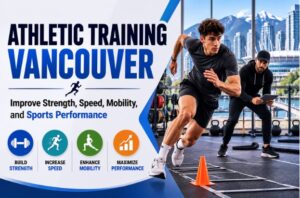
Whether you’re a competitive athlete, recreational sports enthusiast, or active individual, athletic training in Vancouver can provide a structured approach to improving physical performance. Rather than following a generic workout routine, athletic training focuses on the movement skills, strength, conditioning, and physical qualities required for a particular sport or activity.
A personalized program can also help athletes address weaknesses, improve movement efficiency, and build a stronger foundation for long-term performance.
What Is Athletic Training?
Athletic training is a structured form of physical conditioning designed to improve the abilities required for sports and athletic activities.
Depending on the athlete’s goals, a program may incorporate:
- Strength training
- Speed development
- Agility exercises
- Power training
- Mobility work
- Balance and coordination
- Core stability
- Sport-specific movement drills
- Conditioning
Training intensity and exercise selection should be adjusted according to an individual’s age, experience, fitness level, and goals.
Who Can Benefit From Athletic Training?
Athletic training can benefit athletes at different stages of development, including:
- Youth athletes
- High-school athletes
- Collegiate athletes
- Competitive athletes
- Recreational athletes
- Runners and cyclists
- Team-sport participants
- Individuals returning to sport after rehabilitation
A well-designed program can be adapted for both beginners and experienced athletes.
Benefits of Athletic Training
Build Functional Strength
Strength training develops the muscles required for acceleration, jumping, lifting, changing direction, and other athletic movements.
Improve Speed and Agility
Sprint drills, footwork exercises, and change-of-direction training can help athletes develop faster and more controlled movement.
Develop Explosive Power
Appropriately programmed power exercises can improve an athlete’s ability to generate force quickly, which is important in activities such as jumping, sprinting, and throwing.
Enhance Mobility
Mobility training can help athletes achieve the range of motion needed to perform movements efficiently while supporting overall movement quality.
Support Injury Prevention
A comprehensive program can address strength deficits, mobility limitations, balance, and movement mechanics that may contribute to injury risk.
What Happens During an Athletic Training Assessment?
A personalized program generally begins with an assessment of the athlete’s current abilities and goals.
Depending on the program, this may include:
- Health and activity history
- Functional movement assessment
- Strength testing
- Mobility evaluation
- Balance and coordination assessment
- Sport-specific movement analysis
- Goal setting
The results can be used to develop a progressive training plan.
Sport-Specific Training
An important component of athletic development is tailoring training to the physical requirements of a particular sport.
For example:
Soccer
Training may emphasize acceleration, deceleration, agility, single-leg strength, and repeated sprint ability.
Basketball
Programs may focus on jumping ability, lateral movement, acceleration, landing mechanics, and lower-body strength.
Hockey
Training can emphasize skating-related strength, rotational power, balance, agility, and conditioning.
Running
Runners may benefit from strength, mobility, stability, running mechanics, and conditioning work appropriate to their distance and goals.
The objective is to make training relevant to the movements an athlete performs in their chosen activity.
Athletic Training After Injury
Athletes returning from injury may need a gradual transition between rehabilitation and full sports participation.
A progressive program can help rebuild:
- Mobility
- Strength
- Stability
- Power
- Speed
- Sport-specific movement
- Competition readiness
Athletes should follow guidance from their healthcare and rehabilitation professionals when returning to sport after an injury.
How to Get Better Results From Training
Consistency is essential for athletic development. Athletes can support their training by:
- Following a structured program
- Prioritizing exercise technique
- Allowing adequate recovery
- Getting sufficient sleep
- Maintaining appropriate nutrition and hydration
- Gradually increasing training demands
- Communicating pain or unusual symptoms promptly
More training is not always better. Appropriate recovery is an important part of performance development.
Frequently Asked Questions
Is athletic training only for professional athletes?
No. Athletic training can be adapted for recreational athletes, youth athletes, beginners, and anyone who wants to improve physical performance.
What is the difference between athletic training and general personal training?
General personal training often focuses on overall fitness and health. Athletic training places greater emphasis on sport-specific qualities such as speed, agility, power, conditioning, and movement mechanics.
Can athletic training help prevent sports injuries?
Appropriate strength, mobility, balance, and movement training may help address physical factors associated with injury risk. However, no training program can eliminate injury risk completely.
Can I start athletic training after an injury?
Athletes should first follow appropriate medical or rehabilitation guidance. Once cleared for progressive exercise, athletic training can help bridge the gap between rehabilitation and full sports participation.
Conclusion
Athletic training in Vancouver provides a structured way for athletes and active individuals to improve strength, speed, agility, mobility, power, and sport-specific movement. A personalized approach allows training to match the demands of a particular sport while accounting for an athlete’s current abilities and goals.
Whether you’re preparing for competition, developing athletic skills, or returning to sport after rehabilitation, a progressive training program can help build the physical foundation needed for better performance and long-term participation.
