

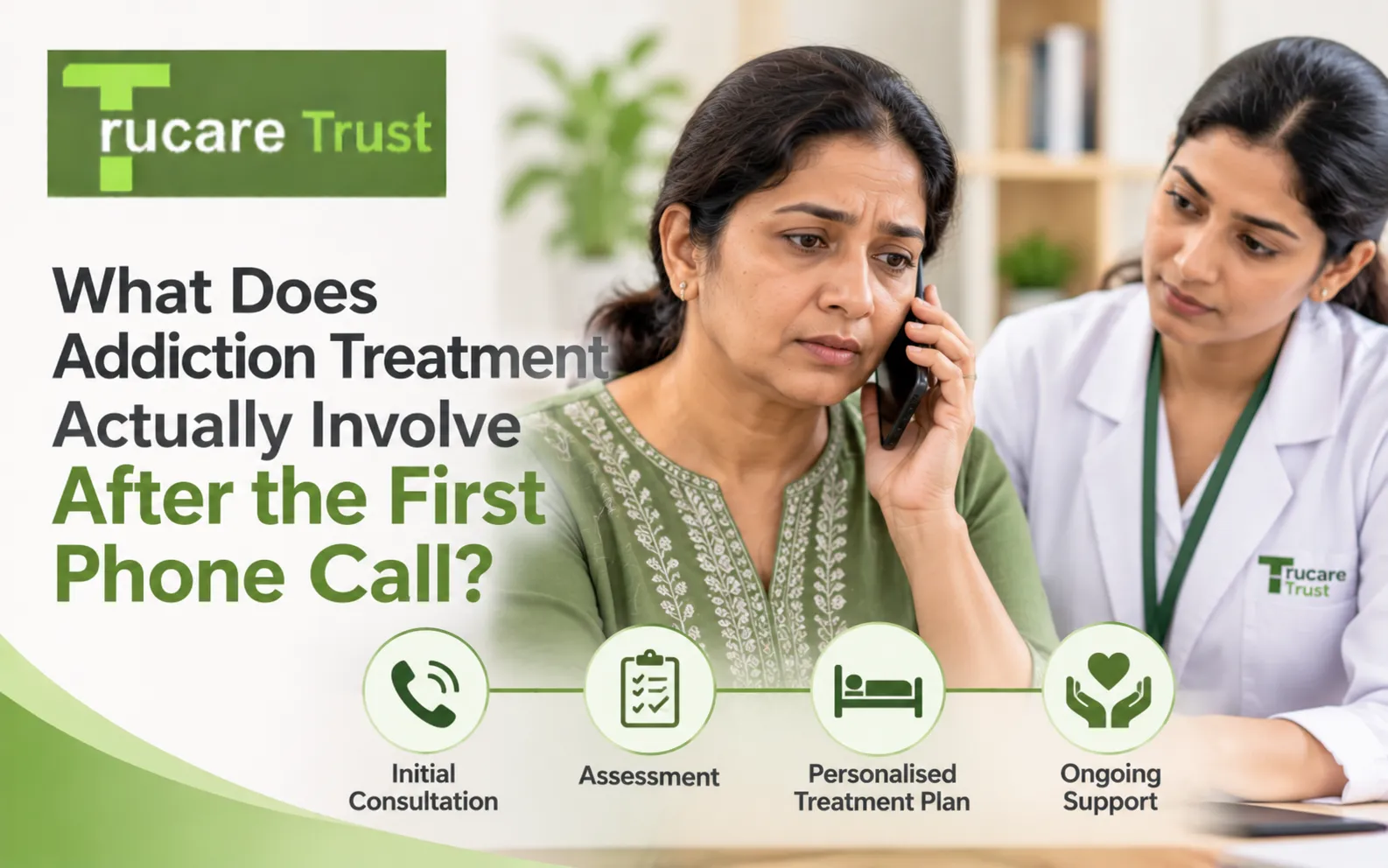
The first question many families ask is straightforward: what will admission cost, and how soon can it happen? Both are reasonable questions. Yet the quality of care is more likely to be revealed by the questions a provider asks in return. What substance is being used? Has the person had withdrawal seizures? Are there current medicines, medical illnesses or symptoms of depression? Is the person willing and able to participate in a treatment discussion?
The answers determine whether the next step should be urgent hospital care, an outpatient appointment, medication-assisted treatment or a residential assessment. They also help prevent a common mistake: believing that every form of dependence follows the same timetable.
India’s national substance-use survey released in 2019 estimated that around 5.7 crore people had harmful or dependent alcohol use. The figure refers to the national survey population and should not be treated as a present-day admission estimate. It shows why credible care needs several routes in, rather than a single residential package sold to every caller.
The first call from an Indian family often comes in the middle of a crisis. A brother may be at work, the parents may be frightened, and a WhatsApp message with fees and a bed photograph may look like enough information. It is not. Before paying an advance, ask who will carry out the medical assessment, what happens if hospital treatment is required and which items the quoted amount excludes. These may include investigations, medicines, transport, specialist consultations and follow-up visits. Ask for the name and registration details of the treating professionals. A reputable service should be willing to explain consent, confidentiality and the process for raising concerns without making the family feel unreasonable.
The first assessment should be specific
For alcohol dependence, the clinician must consider dangerous withdrawal. For opioid use disorder, overdose risk and access to appropriate medication are central. Gambling and gaming concerns may require psychological assessment without medical detoxification. Anxiety, trauma, depression and physical illness can change the treatment choice across all these categories.
Someone looking for addiction treatment should therefore ask who conducts the intake assessment, whether a medical review is available and when a hospital referral would take priority. A service that cannot explain its emergency arrangements should not be trusted merely because the rooms look pleasant in photographs.
Consent and privacy are part of clinical quality. Adults should be given understandable information about treatment choices, costs, contact with relatives and discharge procedures. Families need to know what may be shared with them and what remains confidential. Forced or coercive practices require particular scrutiny. A person seeking treatment has rights as well as responsibilities.
Residential care is a setting, not a therapy
A residential programme can offer structure, distance from certain triggers, group support and supervised routines. None of these alone proves that the treatment is evidence-based. Ask what happens during individual sessions, who delivers psychological interventions, which medicines are used when clinically indicated and how progress is reviewed. The duration of stay should follow assessed needs, not a universal claim that a fixed number of days cures addiction.
A family exploring a rehabilitation center in Mumbai can also compare medical and community options. Discuss practical matters: accessibility, visiting arrangements, language support, availability of psychiatric care and where the person will live after discharge. If someone is travelling from outside Mumbai, continuity with a local doctor back home may matter more than another week in residence.
The work after discharge is part of treatment
The early weeks back at home can involve unexpected pressures. A relative may expect immediate employment. Old friends may call. Family finances may still be strained. A meaningful plan identifies triggers, follow-up appointments, medication continuity where appropriate and the contact person if a lapse occurs.
The phone call should not turn into an instant sale
A family may be frightened and willing to pay a large deposit for the first available bed. Yet a credible intake team should slow down enough to establish what kind of care is needed. A person with possible alcohol-withdrawal seizures requires a different response from someone seeking help for gambling-related debt. Ask for a written explanation of the proposed assessment, the fees involved and any circumstances in which hospital care would be arranged first.
Where a person has medical or psychiatric symptoms, the appropriate professional should evaluate them rather than an admissions executive making a diagnosis over the telephone. A centre that cannot treat an emergency should be able to say so and refer appropriately. Referring someone elsewhere can be a sign of responsible practice, not poor service.
What an individual plan ought to contain
A clear care plan identifies the working diagnosis, immediate risks, agreed goals, proposed therapies, medicines where appropriate and review arrangements. It should also address consent, privacy and the patient’s preferences. Ask how often the plan is reconsidered. If a person is not improving, will staff change the approach or merely extend the stay? Are co-existing mental-health conditions assessed? Is there a documented route to specialist medical care?
The WHO and UNODC’s 2020 international treatment standards describe evidence-based, ethical care across different settings. These principles are useful in India because service names can be confusing: a ‘rehabilitation centre’ may offer residential support, while a specialist outpatient clinic may deliver the main treatment for a particular disorder. Neither label alone establishes quality.
Family involvement: useful, but not unlimited
Relatives often pay fees, arrange transport and manage work leave. They may understandably ask for regular updates. Adult patients, however, retain important privacy and consent interests. Discuss at admission what information can be shared, with whom and in what circumstances. Family sessions should support treatment, not become a setting for accusations or pressure to reveal everything.
Before the first appointment ends, ask for the immediate next action, the named contact person and what to do if the patient worsens overnight. Keep copies of agreed treatment information and payment terms. When care is thoughtful, the family leaves with a clearer understanding of risk and choices. It does not leave believing that an attractive room or a fixed stay length is itself a medical intervention.
The WHO’s 2024 global report found major treatment-access gaps for people with substance-use disorders. Against that background, no family should have to choose care on slogans alone. Ask for a clear explanation, take notes during the conversation and seek an independent medical opinion when uncertain. Good care begins with accurate questions, not with the most persuasive admission pitch.
