

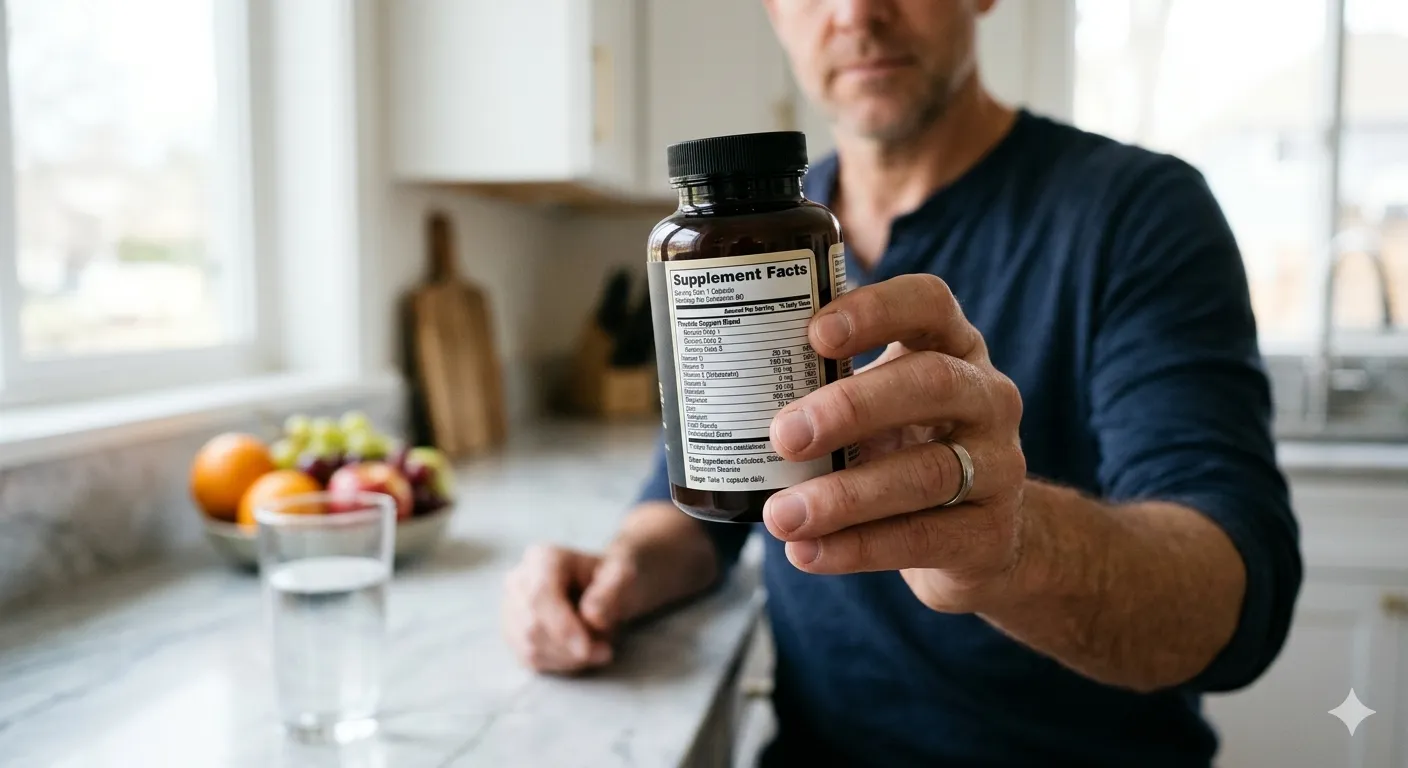
Two bottles can sit side by side on a shelf, both promising to support men’s wellness, yet differ enormously in quality. The difference is rarely on the front, where the marketing lives. It is on the back, in the small print. Learning to read that print is the most valuable skill you can have when choosing any prostate health supplement, because it tells you what you are really paying for.
Start With the Supplement Facts Panel
Every legitimate product carries a panel listing each ingredient and its amount per serving. Look first at the serving size, since a label may show impressive numbers that apply to three capsules while the bottle suggests one. Then check the quantity of each active ingredient and compare it with amounts used in published studies, rather than with the claims on the box.
Beware of Proprietary Blends
Some labels list a proprietary blend with a combined weight but no breakdown of individual ingredients. This can hide the fact that the most expensive or effective ingredient is present only in a tiny amount, while cheaper fillers make up the bulk. Transparent labels that show every dose individually allow you to judge value and safety properly. If a company will not tell you how much of each ingredient is inside, consider that a warning sign.
Understand the Form of Each Ingredient
The same nutrient can come in different forms that the body absorbs differently. Zinc, for instance, appears as zinc oxide, citrate, picolinate and more, and absorption varies between them. Plant extracts are often standardised to contain a set percentage of an active compound, which gives more consistent potency than a simple ground powder. Standardisation language suggests more careful manufacturing, though it is not a guarantee of results.
Look for Independent Testing
Supplements are regulated differently from medicines, and in many countries manufacturers are responsible for their own quality claims. Independent third-party testing adds a layer of reassurance by checking that the bottle contains what the label states and is free from harmful contaminants such as heavy metals. Seals from recognised testing organisations, or batch-specific certificates of analysis available on request, are good signs. Manufacturing in facilities that follow good manufacturing practice standards is another positive marker.
Read the Other Ingredients
The small section marked other ingredients lists fillers, binders, coatings and colours. Most are harmless, but some people have allergies or sensitivities to gluten, soy, dairy or shellfish. Capsule shells may be gelatin, which is unsuitable for vegetarians, or plant-based alternatives. Knowing what is in there prevents unpleasant surprises, particularly if you manage a medical condition.
Be Sceptical of Big Claims
Regulators generally allow supplements to claim they support normal function, but not to claim that they treat or cure disease. If a label promises to shrink the prostate, prevent cancer or replace medication, step away. Phrases such as clinically proven or doctor recommended mean little without a named study or a named professional. Look for specific, modest and honest wording instead, which usually signals a more trustworthy company.
Check Interactions and Suitability
Even natural ingredients can interact with medicines. Herbal products may affect blood clotting, blood pressure or how the liver processes other drugs. Men taking blood thinners, diabetes medication or treatments for urinary symptoms should be particularly careful. Bring the bottle, or a photo of the label, to your pharmacist or doctor, who can check it against your prescriptions in minutes.
Consider Practical Details
Notice the expiry or best-before date, the storage instructions and the number of servings per bottle, because the real cost is the price per daily dose rather than per bottle. Check the return policy and whether customer support is easy to reach. A company that answers questions clearly before you buy is likely to behave the same way after.
Keep a Simple Record
When you start a new product, write down the date, the dose and any changes you notice, positive or negative. After eight to twelve weeks, review the notes honestly. If nothing has changed, it is perfectly reasonable to stop and save your money.
Conclusion
A supplement label is a conversation between the manufacturer and you, and your job is to listen critically. Clear dosing, quality testing, honest wording and compatibility with your health situation matter far more than bold packaging. When you want to see how one brand presents its formulas and information, you can visit medarishealth.com and apply the checklist above to whatever you find. Informed shoppers make better choices, and better choices tend to produce better outcomes.
